
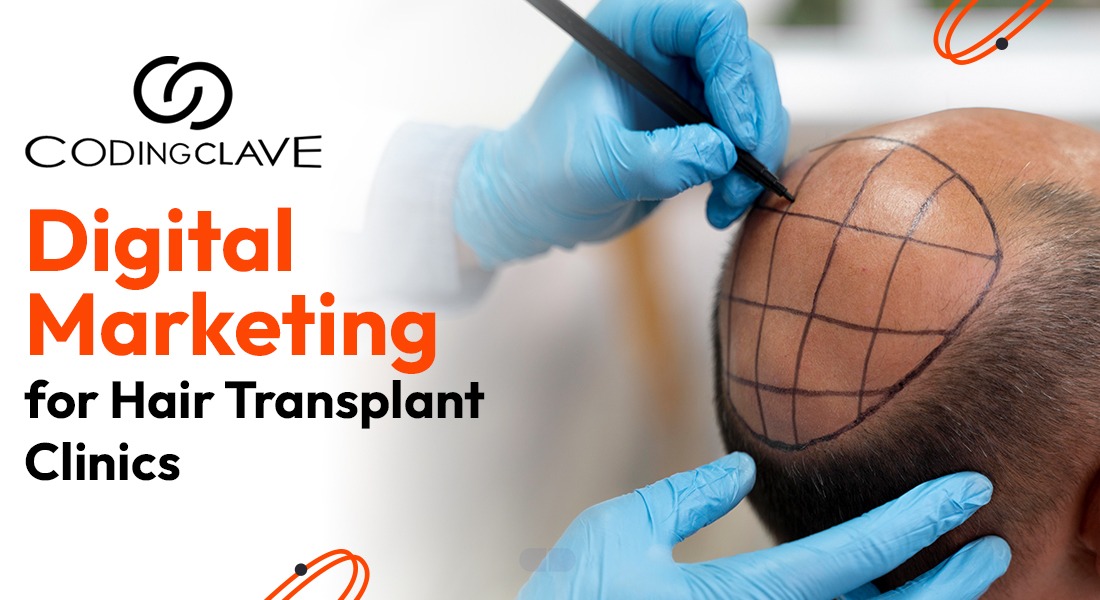
Most hair transplant clinics follow the same marketing routine: run ads, focus on SEO, stay active on social media, collect patient reviews, and build basic funnels. On paper, it looks like a complete plan. In reality, clinics still face uneven appointment bookings, low-quality inquiries, wasted ad budgets, and teams spending hours chasing leads that never convert.
The problem isn’t effort, it’s approach. Many strategies treat marketing as a set of channels rather than a connected system. Effective digital marketing for doctors requires understanding how each step works inside a clinic’s daily operations, where leads drop off, why conversions fail, and how growth can be scaled without burning out staff.
At CodingClave Technologies, we focus on fixing these gaps by building structured, outcome-driven marketing systems designed specifically for medical practices. Before investing heavily in ads or tools, clinics must understand how digital marketing truly supports long-term patient acquisition and sustainable growth.
Understanding Hair Transplant Patient Behavior
Marketing strategies often fail before implementation because they misunderstand fundamental patient psychology. Hair restoration is not impulse healthcare—it involves an extended, emotionally complex decision-making process.
The Patient Journey Timeline
Research Phase (Duration: Months to Years)
- ➦ Silent information gathering without clinic engagement
- ➦ Investigation of hair loss causes and progression patterns
- ➦ General education about restoration options and technologies
Comparison Phase
- ➦ Evaluation of surgeon credentials and experience levels
- ➦ Analysis of different techniques (FUE, FUT, DHI, etc.)
- ➦ Review of result galleries and outcome expectations
Fear Processing Phase
- ➦ Concerns about procedural pain and discomfort
- ➦ Anxiety regarding visible scarring and detection
- ➦ Worries about procedure failure or poor results
- ➦ Cost justification and financial planning
Social Validation Phase
- ➦ Deep analysis of patient reviews across multiple platforms
- ➦ Forum participation (Reddit, hair loss communities)
- ➦ YouTube testimony consumption
- ➦ Direct patient testimonial research
Inquiry Phase
- ➦ Initial contact with selected clinics
- ➦ Consultation scheduling
- ➦ Final decision-making process
The Lead Quality Reality
Most clinics treat every inquiry as if the patient is ready to book immediately. This fundamental misunderstanding creates massive inefficiencies.
Actual Lead Distribution:
- ➦ 60-70%: Early-stage researchers gathering preliminary information
- ➦ 20-30%: Active comparison shoppers evaluating multiple options
- ➦ 5-10%: Surgery-ready prospects prepared to schedule
Without systems to segment these groups, sales teams waste valuable time and advertising costs inflate unnecessarily. Lead volume becomes a vanity metric—intent segmentation is what actually matters.
Beyond Advertising: The Foundation of Effective Marketing
While competitors emphasize Google Ads and Meta advertising heavily, paid traffic alone doesn't create sustainable growth. Advertising amplifies what already exists—it doesn't fix fundamental positioning problems.
Pre-Advertising Foundation Requirements
Before scaling paid traffic, address these foundational elements:
Clinic Differentiation
- ➦ Clear articulation of why patients should choose your clinic
- ➦ Specific methodology or approach distinctions
- ➦ Unique value proposition beyond generic claims
Credibility Signals
- ➦ Surgeon authority and credentials prominently displayed
- ➦ Comprehensive before/after result galleries
- ➦ Third-party validation beyond standard testimonials
- ➦ Educational content demonstrating expertise
Technical Infrastructure
- ➦ Fast-loading website with mobile optimization
- ➦ Clear conversion pathways and booking flows
- ➦ Professional visual presentation
| Existing Weakness | Effect of Paid Traffic | Result |
|---|---|---|
| Generic positioning | Amplifies commodity perception | Price competition, low conversion |
| Weak result portfolio | Highlights lack of proof | High bounce rates, wasted spend |
| Unclear surgeon authority | Magnifies trust gap | Extended sales cycles, abandoned leads |
| Slow website performance | Increases abandonment | High cost-per-acquisition |
Without addressing these fundamentals, PPC becomes an expensive leak rather than a growth engine.
Lead Generation: Quality vs. Volume
Every marketing agency promises "high-quality leads," but the uncomfortable reality of hair transplant advertising is that paid campaigns inevitably attract a mixed pool of prospects.
What Hair Transplant Ads Actually Attract
Prospect Categories:
- ➦ Price-focused shoppers seeking the lowest cost option
- ➦ International bargain hunters comparing domestic vs. overseas pricing
- ➦ Medically unsuitable candidates (insufficient donor area, unrealistic expectations)
- ➦ Curious researchers with no immediate intent
- ➦ Competitors gathering market intelligence
You cannot eliminate this diversity completely, but you can design strategic filters to improve lead quality systematically.
Lead Quality Improvement Framework
Structural Filtering Mechanisms:
Form Differentiation
- ➦ Separate consultation booking forms from educational content downloads
- ➦ Different entry points for different journey stages
- ➦ Progressive information gathering rather than single-step capture
Qualification Questions
- ➦ Age and hair loss duration
- ➦ Current hair loss stage (Norwood scale awareness)
- ➦ Budget range and financing considerations
- ➦ Timeline expectations and flexibility
- ➦ Previous restoration experience
Educational Asset Strategy
- ➦ Require content consumption before consultation access
- ➦ Video education series as pre-qualification
- ➦ Self-assessment tools to filter unsuitable candidates
Traffic Routing Logic
- ➦ Early-stage prospects → automated email nurture sequences
- ➦ Comparison shoppers → detailed comparison resources
- ➦ Surgery-ready leads → direct consultation booking
The Perceived Slowdown
Most clinics resist filtering because it feels like adding friction and reducing volume. However, without qualification systems:
- ➦ Patient coordinators experience burnout from unqualified conversations
- ➦ Surgeons waste time in unproductive consultations
- ➦ Sales cycle length extends due to poor prospect fit
- ➦ Team morale declines from low conversion rates
Google Ads: Instant Visibility with Fragile Economics
Google Ads delivers immediate visibility for hair transplant clinics, but sustainable success requires understanding its inherent limitations and economic vulnerabilities.
What Breaks in Google Ads
Cost Escalation Patterns
- ➦ Cost-per-click increases quarterly in competitive metropolitan markets
- ➦ Medical tourism aggregators inflate auction dynamics
- ➦ Competitor bidding wars erode profit margins
- ➦ Premium placement costs grow faster than conversion value
Dependency Risk
- ➦ Clinics become reliant on paid traffic for consistent flow
- ➦ Algorithm changes create overnight revenue volatility
- ➦ Budget cuts immediately impact patient volume
- ➦ No owned asset development
| Traffic Source | Timeframe | Primary Function | Weakness |
|---|---|---|---|
| Google Ads | Immediate | Captures existing demand | Fragile economics, platform dependency |
| SEO | 6-18 months | Builds future demand | Slow initial results, sustained effort required |
Strategic Approach:
- ➦ Ads capture prospects actively searching for solutions now
- ➦ SEO creates sustainable visibility for future researchers
- ➦ Without this balance, clinics remain perpetually dependent on paid traffic
SEO for Hair Transplant Clinics: Slow Build, Long-Term Stability
Search engine optimization lacks the immediate gratification of paid advertising, but it systematically solves three structural business problems that advertising cannot address.
SEO's Strategic Benefits
Economic Advantages
- ➦ Progressively reduces cost per acquisition over time
- ➦ Creates owned traffic assets independent of platform policy changes
- ➦ Builds sustainable patient flow resistant to competitive pressure
Authority Development
- ➦ Establishes surgeon expertise through comprehensive content
- ➦ Demonstrates knowledge depth that builds pre-consultation trust
- ➦ Differentiates clinic through educational leadership
Early-Stage Capture
- ➦ Intercepts prospects before active comparison shopping begins
- ➦ Influences decision criteria during research phase
- ➦ Creates preference before competitors enter consideration
Beyond "Hair Transplant Near Me"
Comprehensive SEO strategies cover the full spectrum of patient questions and concerns:
Procedural Education Content
- ➦ FUE vs. FUT technique comparisons with detailed explanations
- ➦ DHI and sapphire blade methodology distinctions
- ➦ Robotic-assisted procedures and technology options
Practical Information
- ➦ Recovery timeline expectations and work absence planning
- ➦ Hair density achievable results and realistic outcomes
- ➦ Post-procedure care requirements and restrictions
Problem-Specific Content
- ➦ Failed transplant correction and revision procedures
- ➦ Donor area limitations and extraction capacity
- ➦ Scar coverage and camouflage options
- ➦ Diffuse hair loss patterns and candidacy considerations
Content Strategy Value
This educational layer attracts informed prospects who:
- ➦ Understand procedural realities and have realistic expectations
- ➦ Require less sales effort to convert
- ➦ Generate better long-term satisfaction and referrals
- ➦ Cost less to acquire than generic "hair transplant" searchers
The topic cluster approach—connecting procedural content with broader healthcare marketing strategies—creates comprehensive resource ecosystems that establish authority while serving patient needs at every journey stage.
Social Media: Trust Acceleration, Not Direct Sales
Most hair transplant clinics approach social media as a sales channel, posting before/after transformations and promotional offers. This surface-level strategy misunderstands the platform's actual function in the patient journey.
Social Media's Real Purpose
Social platforms function as trust accelerators and anxiety reducers rather than direct conversion mechanisms.
Effective Social Content Serves These Functions:
Humanizing Surgeons
- ➦ Behind-the-scenes clinic environment
- ➦ Surgeon personality and communication style
- ➦ Team culture and patient care philosophy
Demystifying Procedures
- ➦ Simple language explanations of complex processes
- ➦ Step-by-step procedure walkthroughs
- ➦ Equipment and technology education
Showcasing Patient Journeys
- ➦ Real patient stories with emotional context
- ➦ Timeline documentation from consultation to final results
- ➦ Honest discussion of challenges and recovery
Addressing Common Fears
- ➦ Pain management and anesthesia approaches
- ➦ Scar visibility and healing processes
- ➦ Failure rates and realistic risk discussions
- ➦ Financial investment and value considerations
The Conversion Mechanism
Patients don't book procedures because of social media posts. They book because social content systematically removes anxiety and builds confidence in the decision they're already considering. This is the platform's actual job—not direct sales generation.
Website and Landing Pages: Where Money Gets Lost
A common and expensive failure pattern occurs when clinics invest heavily in traffic generation while directing that traffic to poorly structured web properties.
The Generic Service Page Problem
What Typically Happens:
- ➦ Paid traffic lands on generic "Hair Transplant Services" pages
- ➦ No clear narrative or decision pathway
- ➦ Information presented without conversion logic
- ➦ Visitors leave without taking action despite initial interest
High-Performance Web Architecture
Essential Page Types:
Dedicated Procedure Pages
- ➦ Separate pages for FUE, FUT, DHI, and specialty procedures
- ➦ Detailed explanations with visual documentation
- ➦ Specific benefit articulation for each approach
Campaign-Specific Landing Pages
- ➦ Pages designed for specific ad messages and audiences
- ➦ Matching message-to-page continuity
- ➦ Focused conversion goals without navigation distraction
Educational Resource Library
- ➦ Downloadable guides for early-stage researchers
- ➦ Video education series with email capture
- ➦ Self-assessment tools and calculators
Friction-Reduced Booking Flows
- ➦ Simplified consultation scheduling
- ➦ Clear next-step instructions
- ➦ Multiple conversion pathways for different journey stages
The Decision Engine Concept
Your website is not a digital brochure—it's a decision engine designed to guide visitors systematically through evaluation and conversion. If pages don't provide clear step-by-step progression, leads abandon even when traffic quality is excellent.
| Website Function | Low-Performance Approach | High-Performance Approach |
|---|---|---|
| Information Architecture | Single generic service page | Procedure-specific pages with clear differentiation |
| Traffic Landing | Homepage or generic page | Campaign-matched landing pages |
| Lead Capture | Contact form only | Multiple entry points (consultation, education, assessment) |
| Decision Support | Static information presentation | Guided pathways with progressive education |
What Competitors Don't Tell You: The Invisible Failure Points
Beyond surface-level tactics, several critical dynamics determine whether marketing success becomes sustainable or creates new operational problems.
Scaling Exposes Medical Capacity Limitations
Marketing success creates operational pressure that most clinics are unprepared to handle. The growth itself becomes the problem.
The Escalation Pattern:
- ➦ Increased leads → Higher consultation volume
- ➦ Higher consultation volume → Extended wait times
- ➦ Extended wait times → Rushed evaluations
- ➦ Rushed evaluations → Patient experience degradation
- ➦ Experience degradation → Review decline
- ➦ Review decline → Conversion rate drop
The Surgeon Overload Cycle:
- ➦ Professional burnout from excessive consultations
- ➦ Reduced per-patient attention quality
- ➦ Decreased surgical precision from fatigue
- ➦ Rising complication rates
- ➦ Reputation damage
Pre-Scaling Operational Questions:
Before increasing marketing investment, systematically address:
- ➦ Surgical Capacity: How many procedures per week can you perform sustainably without quality decline?
- ➦ Educational Support: Who manages pre-operative education and expectation setting?
- ➦ Coordinator Ratios: What's the optimal coordinator-to-surgeon ratio for your volume?
- ➦ Post-Op Systems: Can you maintain follow-up quality at higher volumes?
- ➦ Physical Infrastructure: Does your facility accommodate increased patient flow?
Critical Principle: Marketing must match clinical capacity, not outrun it. Growth without operational planning breaks clinics systemically.
Reputation Systems Matter More Than Funnels
Conversion funnels generate short-term results. Reputation systems compound over time and ultimately determine long-term sustainability.
Patient Obsession Points:
- ➦ Google Business Profile reviews and ratings
- ➦ RealSelf ratings, photos, and detailed reviews
- ➦ Reddit threads and community discussions
- ➦ YouTube video testimonials and journey documentation
- ➦ Hair restoration forum reputation
Reputation Decay Patterns:
Single negative patterns spread rapidly and create lasting damage:
- ➦ Poor aftercare experiences generate detailed negative reviews
- ➦ Unrealistic promises create bitter disappointment and vocal complaints
- ➦ Complication mismanagement becomes viral reputation damage
- ➦ Aggressive sales tactics generate warning posts across platforms
Essential Reputation Infrastructure:
Your digital strategy must include:
Systematic Review Acquisition
- ➦ Automated post-procedure review requests
- ➦ Multiple platform review generation
- ➦ Timing optimization for maximum participation
Post-Operative Follow-Up Workflows
- ➦ Structured check-in schedules
- ➦ Problem identification and rapid response
- ➦ Long-term result documentation
External Platform Monitoring
- ➦ Reddit mention tracking and engagement
- ➦ Forum discussion participation
- ➦ Review platform response management
- ➦ YouTube comment monitoring
Without this infrastructure, all acquisition channels eventually decay as reputation erodes.
| Restriction Category | Google Ads | Meta Ads |
|---|---|---|
| Before/After Imagery | Limited allowance with disclaimers | Frequently rejected, inconsistent enforcement |
| Medical Claims | Evidence-based only, no guarantees | Similar restrictions, vaguer guidelines |
| Targeting Options | Limited health-based targeting | No health condition targeting |
| Landing Page Requirements | Clear disclaimers, qualification info | Medical practice verification required |
The Overnight Collapse Scenario:
Clinics frequently experience:
- ➦ Entire campaigns disapproved suddenly due to policy interpretation changes
- ➦ Traffic volumes dropping to zero overnight
- ➦ Revenue impact before alternative creative is prepared
- ➦ Scrambling to rebuild campaigns under new restrictions
Resilient Campaign Architecture:
Multiple Creative Formats
- ➦ Educational content that doesn't rely on before/after images
- ➦ Testimonial-based creative with proper disclaimers
- ➦ Surgeon expertise and credentials-focused messaging
- ➦ Technology and methodology education
Diversified Traffic Sources
- ➦ Not solely dependent on a single platform
- ➦ SEO as non-advertising traffic foundation
- ➦ Email marketing to owned audience
- ➦ Referral system development
Backup Campaign Readiness
- ➦ Pre-approved alternative creative sets
- ➦ Quick-deployment contingency campaigns
- ➦ Policy-compliant evergreen content
Platform dependency is a real business risk that requires active planning and mitigation.
Advanced Realities Most Guides Avoid
These insights come from practical clinic experience rather than marketing theory abstraction.
International Patients Distort Funnel Metrics
Medical tourism appears attractive from a revenue perspective, but international patient inquiries create fundamentally different economics and conversion patterns.
International Patient Characteristics:
- ➦ Significantly longer conversion cycles
- ➦ Complex logistical coordination requirements
- ➦ Visa assistance and documentation needs
- ➦ Accommodation and travel arrangement coordination
- ➦ Higher cancellation and no-show rates
- ➦ Different price sensitivity and negotiation patterns
Metric Contamination Problem:
When international and local leads are tracked together:
- ➦ Conversion rates appear artificially low
- ➦ Sales cycle length calculations become meaningless
- ➦ Cost-per-acquisition data misrepresents both segments
- ➦ Resource allocation decisions based on blended data become flawed
| Metric | Local Patients | International Patients |
|---|---|---|
| Average Conversion Time | 2-6 weeks | 3-6 months |
| Conversion Rate | 15-25% | 5-12% |
| Cancellation Rate | 5-10% | 15-30% |
| Support Time Required | Moderate | High |
| Lifetime Value Potential | Moderate | High (includes additional services) |
Track these segments separately to make informed decisions about marketing investment and operational resource allocation.
Cheap Leads Increase Long-Term Costs
Low cost-per-lead metrics feel rewarding in isolation but often signal deeper problems that create expensive downstream consequences.
Hidden Costs of Cheap Leads:
Staff Time Consumption
- ➦ More unqualified conversations
- ➦ Extended education requirements
- ➦ Increased objection handling
- ➦ Lower motivation from poor conversion
Higher No-Show Rates
- ➦ Wasted consultation slots
- ➦ Surgeon time inefficiency
- ➦ Coordinator follow-up burden
- ➦ Schedule gap management
Extended Sales Cycles
- ➦ Multiple touchpoints required
- ➦ Higher abandonment rates
- ➦ Increased nurture costs
- ➦ Delayed revenue realization
The Economic Reality:
High-intent leads cost more upfront but:
- ➦ Convert faster with less effort
- ➦ Require fewer touchpoints
- ➦ Show up for scheduled consultations
- ➦ Generate better patient satisfaction
- ➦ Create more referrals
Critical Optimization Principle: Always optimize for cost per booked surgery, not cost per lead. The cheapest lead is rarely the most profitable patient.
Most Clinics Ignore Post-Surgery Marketing
The overwhelming majority of marketing focus concentrates on new patient acquisition while completely neglecting the most powerful growth loop available.
The Missed Opportunity:
Post-procedure patients represent:
- ➦ Natural referral sources with credible personal testimony
- ➦ Long-term progress photo documentation for marketing assets
- ➦ Organic content generation through social sharing
- ➦ Testimonial and review creation
- ➦ Additional service opportunities (PRP, follow-up procedures)
Post-Op Marketing Components:
Systematic Referral Programs
- ➦ Structured incentives for patient referrals
- ➦ Easy referral sharing mechanisms
- ➦ Tracking and attribution systems
Progress Documentation
- ➦ Professional photo sessions at key milestones
- ➦ Patient journey video compilation
- ➦ Before/during/after content creation
- ➦ Social media sharing coordination
Ongoing Engagement
- ➦ Educational content for post-op care optimization
- ➦ Maintenance product recommendations
- ➦ Future procedure information for additional areas
- ➦ Community building through patient networks
Testimonial Development
- ➦ Video testimonial recording
- ➦ Written review encouragement across platforms
- ➦ Case study creation with patient permission
- ➦ Social proof asset library building
The Compounding Effect:
Post-surgery marketing creates a flywheel where:
- ➦ Happy patients generate authentic content
- ➦ Authentic content builds trust with prospects
- ➦ Trust accelerates conversions
- ➦ Better conversions create more happy patients
- ➦ The cycle strengthens over time
This is your strongest growth loop—and it's almost universally neglected.
What a Sustainable System Actually Looks Like
Effective hair transplant marketing isn't built on isolated tactics or growth hacks. It's an integrated ecosystem where each component strengthens the others.
The Marketing Ecosystem Framework
SEO Foundation
- ➦ Builds educational authority and thought leadership
- ➦ Captures early-stage researchers before competitor awareness
- ➦ Creates owned traffic assets independent of ad spend
- ➦ Establishes long-term cost-per-acquisition advantages
Paid Advertising Layer
- ➦ Captures active demand from surgery-ready prospects
- ➦ Provides immediate visibility while SEO develops
- ➦ Generates testing data for messaging and positioning
- ➦ Fills consultation calendars during SEO development phase
Social Media Trust Building
- ➦ Humanizes surgeons and demonstrates expertise
- ➦ Addresses fears and concerns systematically
- ➦ Provides social proof through patient stories
- ➦ Creates content assets for use across channels
Website Decision Architecture
- ➦ Guides prospects through education and evaluation
- ➦ Matches different entry points to journey stages
- ➦ Reduces friction in conversion processes
- ➦ Supports both immediate and long-term conversion paths
Email Nurture Systems
- ➦ Develops early-stage prospects over extended timelines
- ➦ Provides value before sales pressure
- ➦ Segments audiences for relevant messaging
- ➦ Maintains top-of-mind awareness during consideration
Review and Reputation Management
- ➦ Reinforces credibility through third-party validation
- ➦ Addresses concerns before they become barriers
- ➦ Creates feedback loops for operational improvement
- ➦ Compounds trust over time
Operational Capacity Alignment
- ➦ Supports clinical growth without quality degradation
- ➦ Maintains patient experience standards at scale
- ➦ Enables sustainable team performance
- ➦ Creates a platform for continued expansion
System Integration Principles
Each Component Feeds Others:
- ➦ SEO content becomes email nurture material
- ➦ Social content addresses objections found in sales conversations
- ➦ Review feedback informs content creation priorities
- ➦ Paid ad insights guide SEO keyword strategy
- ➦ Website analytics reveal ed
Structure Over Speed
Digital marketing for hair transplant clinics fundamentally isn't about generating traffic volume—it's about creating alignment across multiple dimensions simultaneously.
The Alignment Requirements
Patient Psychology Understanding
- ➦ Honoring the extended decision timeline
- ➦ Addressing fears and concerns systematically
- ➦ Providing education without sales pressure
- ➦ Meeting prospects at their current journey stage
Clinical Capacity Matching
- ➦ Scaling marketing in sync with operational capacity
- ➦ Maintaining quality standards during growth
- ➦ Protecting the surgeon and staff wellbeing
- ➦ Building infrastructure before stress points emerge
Reputation System Development
- ➦ Systematic review generation and management
- ➦ External platform monitoring and engagement
- ➦ Patient experience optimization
- ➦ Long-term trust compounding
Channel Balance and Diversification
- ➦ Combining short-term paid traffic with long-term SEO
- ➦ Owned audience development through email
- ➦ Social trust-building alongside conversion optimization
- ➦ Platform independence to reduce single-point failures
Speed vs. Structure
Competitors Sell:
- ➦ Rapid patient volume increases
- ➦ Immediate ROI from advertising
- ➦ Quick-win tactics and shortcuts
- ➦ Channel-focused strategies
Real Growth Comes From:
- ➦ Sustainable system architecture
- ➦ Patient journey respect and support
- ➦ Operational readiness before scaling
- ➦ Multi-channel integration
- ➦ Long-term reputation compounding
The Outcome of Proper Structure
When you design for resilience instead of volume:
- ➦ Booking patterns stabilize and become predictable
- ➦ Teams experience sustainable workloads rather than burnout cycles
- ➦ Patients arrive informed and ready rather than confused and skeptical
- ➦ Marketing works with your clinic's strengths rather than against operational limitations
- ➦ Growth compounds over time instead of creating new problems
This is when marketing finally starts working with your clinic, not against it.
.png)
CodingClave Technologies
Digital Marketing Agency in Lucknow, As an SEO Consultant with over 7th years of experience, I specialize in helping B2B companies and startups grow their customer base and scale revenue through SEO and content marketing. If you're seeking an SEO expert who understands growth marketing and is committed to delivering measurable outcomes, connect with me on LinkedIn to schedule a free consulting session!


.jpg)